Travel by Trinidad Is Now on Android (And Why We Built Two Native Apps)
When we launched the Travel by Trinidad app on the App Store back in January, the first question we kept hearing was: “When is it coming to Android?”
Today, I can finally say it is here. The Travel by Trinidad app is officially live on Google Play.
But this post is not just an announcement. I want to explain why it took the time it did, why we chose the path we chose, and why “just make it work on both phones” is a much bigger decision than most people realize.
The Easy Path We Did Not Take
There are shortcuts in app development. Plenty of them.
The fastest way to get an app onto both iPhone and Android is to build it once using a cross-platform framework, something that writes one set of code and compiles it for both platforms. From a business perspective, this makes perfect sense. One codebase, one team, half the work. Ship faster, maintain less.
We looked at that option seriously. And then we chose not to take it.
Instead, we built two separate native apps. One written in Swift for iPhone. One written in Kotlin for Android. Two distinct codebases, each built specifically for its platform, using the tools and design patterns that Apple and Google intended.
This was, objectively, more work. Significantly more work. Every feature gets implemented twice. Every bug fix happens in two places. Every update requires testing on both platforms independently. It is not efficient in the traditional sense.
But efficiency was not the priority. The experience was.
Why Native Matters
If you have ever used an app that felt slightly off on your phone, there is a good chance it was built with a cross-platform tool. The scrolling is not quite right. Animations feel a fraction of a second slow. The keyboard behaves differently than every other app on your phone. The navigation gestures do not match what your muscle memory expects.
These are small things individually. But travel apps are not something you use once and forget. You check your itinerary at the airport gate. You pull up a confirmation number at the hotel desk. You look up your flight status while standing in a boarding line. In those moments, the app needs to feel like it belongs on your phone, not like it is fighting against it.
Native apps feel like they belong. They use the same animations, the same gesture patterns, the same navigation structures as every other app on your device. An iPhone user expects certain behaviors and an Android user expects different ones. Both are right. Both deserve an app that respects those expectations.
That was the deciding factor. We build travel tools for people who are often stressed, rushed, or in unfamiliar places. The last thing they need is an app that adds friction because it was optimized for developer convenience instead of user experience.
Same Features, Both Platforms
The commitment we made early on was straightforward: every feature that exists on iPhone will exist on Android. Not eventually. Not in a future update. At parity.
This sounds simple until you sit down and list everything that needs to work identically across two completely different platforms.
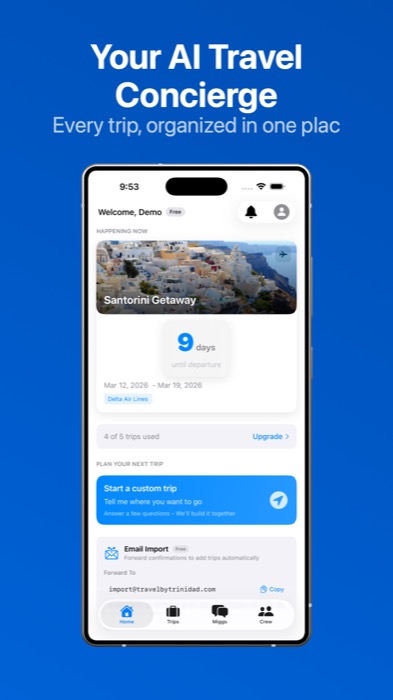
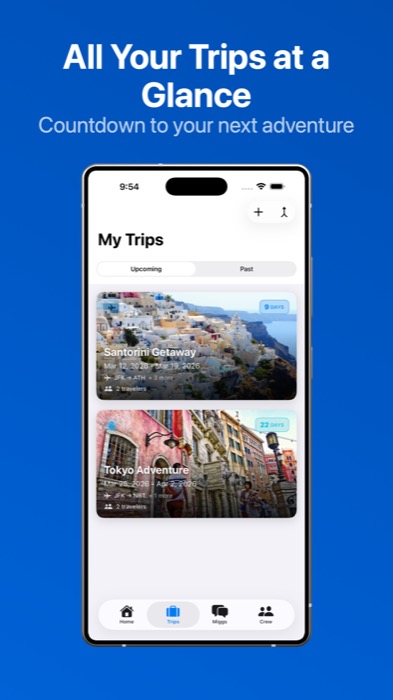
Email parsing. Forward your confirmation emails and the app builds your itinerary automatically. This works the same way whether you are on a Pixel or an iPhone. Same parsing engine on the backend, same organized result on your screen.
Miggs AI. Our AI concierge answers questions about your trips, your destinations, and your travel plans. Same streaming responses, same conversation history, same intelligence on both platforms.
Time Capsule. Your trip photos, preserved and organized. Upload from either platform, view from either platform. Seal a capsule on your iPhone and open it on your friend’s Android. It just works.
AI Postcards. This one I am particularly proud of. We launched AI postcards as a way to transform your travel photos into styled, shareable postcards. Eleven themes, custom tone captions, the whole experience. Getting this right on Android required rebuilding the entire postcard editor, the generation flow, the fullscreen preview, the save-to-capsule pipeline. We did not ship a stripped-down version. We shipped the complete feature.
Flight tracking. Real-time gate changes, delays, and status updates. Same data sources, same alert timing, same peace of mind.
Crew. Share trips with travel companions. Add people, see the same itinerary, stay coordinated. Works across platforms because the data lives on our servers, not on any single device.
Cost tracking and splitting. Track what the trip costs, see who owes what, keep the group finances transparent.
Every one of these features was built twice. Tested twice. Refined twice. Because a traveler on Android should never feel like they are getting a lesser version of the experience.
The Parity Problem
Here is something most people do not think about: parity is not just about features existing on both platforms. It is about features behaving identically.
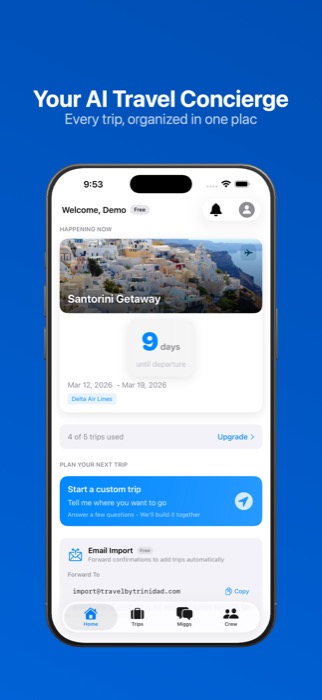
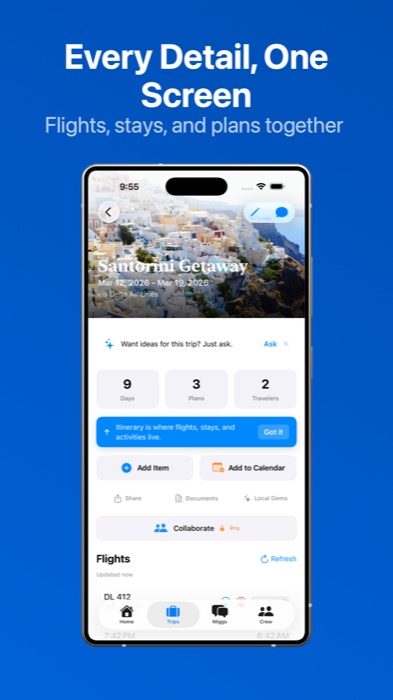
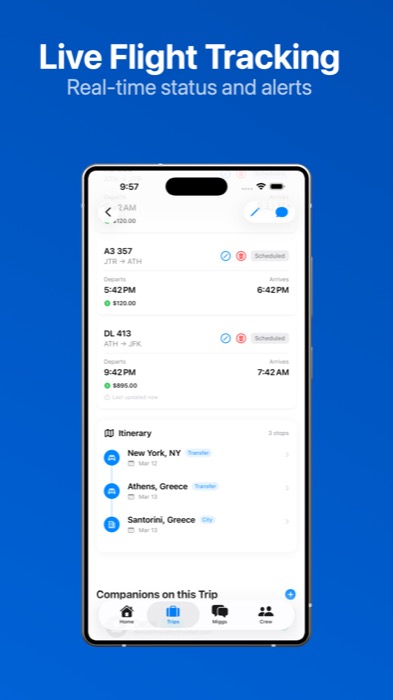
A button in the same place. A screen that loads at the same speed. An animation that communicates the same thing. Error messages that say the same words. Empty states that show the same guidance.
When someone in your travel group is on an iPhone and someone else is on Android, and they are both looking at the same shared trip, they should see the same information presented in the same way. If one person says “tap the blue button at the bottom” and the other person does not have a blue button at the bottom, the app has failed.
We treat our backend API as the single source of truth. Both apps call the same endpoints, receive the same data, and are expected to present it consistently. When we add a feature to the API, it does not ship until both the iPhone and Android apps support it.
This is a discipline, not a default. It requires coordination, testing, and a willingness to hold a release until both platforms are ready. We have done exactly that multiple times already.
What This Means for Travelers
If you are an Android user who has been waiting for this, everything is ready for you. Download the app from Google Play, sign in, and you have the full Travel by Trinidad experience.
If you are already a Travel by Trinidad client, the app is part of your experience at no additional cost. Same as iPhone. No premium tier required for client features, no upsells for functionality that should be included.
If you are someone who just wants a better way to organize trip details, forward confirmation emails, and have an AI concierge available for travel questions, the free tier gives you all of that on either platform.
And if your travel group includes both iPhone and Android users (which, statistically, most groups do), everyone can now be on the same page. Literally. The same trip, the same itinerary, the same updates.
The Work Behind the Scenes
I want to be honest about what this took. Building two native apps is not glamorous. It is long hours of implementing the same feature in two different languages, two different IDEs, with two different sets of platform quirks.
Swift and Kotlin are both excellent languages, but they think differently. The way you manage state in SwiftUI is fundamentally different from how you manage it in Jetpack Compose. The way iOS handles background tasks is not the same as Android. Push notifications, deep links, image handling, camera access, file storage. Every single system-level feature has platform-specific considerations.
We also dealt with the realities of Android’s device diversity. iPhone apps run on a handful of screen sizes with predictable hardware. Android apps run on thousands of different devices with different screen densities, different amounts of memory, different versions of the operating system. Making the app feel good on a Samsung Galaxy, a Google Pixel, and a budget phone from three years ago requires careful attention to performance and layout.
None of this is visible to the person using the app. And that is the point. The work is invisible so the experience feels effortless.
What Comes Next
The Android launch is not the finish line. It is a starting point. Just as the iPhone app has continued to evolve since January, adding AI postcards, improving flight tracking, refining the Miggs experience, the Android app will evolve in lockstep.
When a feature ships on iPhone, it ships on Android. When we improve something on one platform, we improve it on both. This is not a promise we make lightly. It is a commitment that shapes how we plan, build, and release every update.
We are also continuing to develop the web app as a complement to the native experience. Some things are better on a bigger screen. But for the core travel companion experience, for the app you pull out at the gate or the hotel lobby, native is where we believe the quality bar needs to be.
For Android Users Ready to Explore
The app is available now on Google Play. It is also still available on the App Store for iPhone users. And you can learn more about both on our app page.
If your email inbox is full of scattered booking confirmations, if your next trip involves coordinating with a group, if you have travel photos sitting in your camera roll that deserve a second life as AI postcards, the app is built for exactly those situations.
And now, it is built for everyone. Regardless of which phone is in your pocket.