Virgin Voyages in 2026: What Travelers Keep Asking Me
If you feel like Virgin Voyages keeps coming up lately, you are not imagining it. This question keeps landing in my inbox from couples, friend groups, honeymooners, and even longtime cruisers who usually stick with the big mainstream lines. They are hearing that Virgin feels different, they are seeing promotions pop up, and they want to know what is real, what is marketing, and what actually matters once you are the one making the booking.
I get why there is confusion. Virgin Voyages does a few things very differently from the rest of the cruise industry. It is adults only, the dining model is different, there is no traditional drink package, and loyalty perks are structured in a way that has created a lot of questions, especially with the recent status match push and ongoing My Next Virgin Voyage interest.
I have been watching the same pattern with clients. The people who love Virgin tend to really love it. The people who are unsure usually are not asking whether it is good. They are asking whether it is good for them. That is the better question.
So let me break this down the way I would in a consultation. Not as a fan club pitch, not as a one-size-fits-all answer, just as a practical look at what travelers are asking me most right now, and what is worth knowing before you book.
The first question, is Virgin Voyages actually worth it?
In my experience, Virgin is worth it when you value atmosphere, food, and a genuinely adult environment more than waterslides, kids clubs, or a giant list of family activities. Every Virgin Voyages sailing is 18 and up, and the line states clearly that the minimum age to book and sail is 18. That alone changes the feel of the ship in a big way.
For some travelers, that is the whole selling point. They want a cruise where the pool deck feels grown up, dinner can stretch out a little longer, and nightlife does not have to compete with a family audience. For others, especially multigenerational families or parents traveling with younger kids, it is obviously not the right fit. That does not make Virgin better than everything else. It makes it very specific.
The other part of the value equation is what is included. Virgin has built a reputation around including more in the fare than many cruise lines do, especially when it comes to dining, Wi-Fi, essential drinks, and group fitness classes. That said, there has been an important change on gratuities. Starting October 7, 2025, Virgin began applying a daily service gratuity of $22 per sailor to the onboard folio, or $20 per night if prepaid before the voyage. That is a big detail, because a lot of travelers still think gratuities are automatically included across the board.
So yes, Virgin can absolutely be worth it. But I would not sell it as a bargain play. I would sell it as a fit play. If you want a polished adults-only vacation with a modern feel and you like the idea of a ship that does not revolve around upcharges every five minutes, it is a strong option. If your top priority is finding the absolute cheapest cruise fare or you need a kid-friendly ship, I would look elsewhere.
What is actually included now, and what still costs extra?
This is where I see a lot of mixed information. Travelers hear that Virgin includes “everything,” then they get into the details and realize it is not quite that simple.
What is generally included in the voyage fare is a much wider dining selection than you find on many mainstream lines. Virgin leans away from the giant main dining room and buffet model and instead offers a collection of included restaurants and casual venues across the ship. Basic Wi-Fi is included, essential beverages are included, and group fitness classes are part of the experience as well.
What is not included is just as important. Premium alcoholic beverages, specialty coffees, fresh juices, spa treatments, shore excursions, retail purchases, casino spending, premium streaming Wi-Fi, and air or transfers are not automatically part of the base fare. Transfers are one area where travelers sometimes assume more is bundled than it really is, and that can create headaches on embarkation or disembarkation day.
Then there is gratuity. Before the 2025 change, Virgin was widely known for including gratuities in the experience. That is no longer a safe blanket statement. For sailings booked under the current structure, service gratuities are an added daily charge unless prepaid, though Virgin still says there is no need to tip separately for drinks, dining, or spa during the voyage once the service gratuity is covered.
That distinction matters when you are comparing Virgin to other premium-feeling options. The line still offers a cleaner pricing structure than a lot of competitors, but you should go into it with clear eyes. I would rather a client understand the real cost upfront than book on the assumption that every extra is already baked in.
The Bar Tab question, why no drink package?
This one comes up constantly. Virgin does not offer a traditional unlimited drink package. The company says that directly in its FAQ and instead pushes Bar Tab, which is prepaid onboard credit that can be used on premium beverages around the ship and at the Beach Club at Bimini.
Bar Tab is different from the unlimited packages travelers are used to on Royal Caribbean, Norwegian, MSC, or Carnival. You preload a dollar amount before sailing, and Virgin adds bonus credit at certain purchase levels. Virgin’s current public examples show bonuses tied to specific pre-purchase amounts, but those promotional amounts can change, so I never like to quote them to clients without checking the active offer at the moment we are booking.
The upside is flexibility. You are not forced into the math of “I need six cocktails a day to make this worthwhile,” and your cabin mate is not automatically required to buy the same package just because you want one. Virgin also allows Bar Tab to be used for drinks for other people, which is a nice practical difference compared with stricter package systems.
The downside is equally simple. Unused Bar Tab is generally nonrefundable at the end of the voyage, and you cannot buy it once you are onboard. Virgin says it has to be purchased in advance, up to 24 hours before sailing. So if you are a light drinker who guesses too high, that is money left on the table. If you are a heavy drinker who is used to extracting every penny of value from an unlimited package, Virgin’s system may not feel as favorable.
My advice is pretty straightforward. Do not buy Bar Tab because it sounds like a deal. Buy it because you have a realistic sense of your habits. A couple who will do specialty coffee in the morning, a cocktail before dinner, wine with dinner, and maybe one nightcap can make good use of it. Someone who barely drinks alcohol and does not care about fancy coffee probably does not need it.
Blue Extras, status match, and why people keep getting different answers
Loyalty is probably the messiest Virgin conversation right now, not because the program is impossible, but because travelers often piece it together from screenshots, old blog posts, and half-explained call center conversations.
Here is the part worth grounding in official language. Virgin’s Sailing Club status match page says the Status Match offer invited travelers with airline, hotel, or cruise loyalty status to be fast-tracked into the program and receive Blue Extras on a new sailing. That same page also says applications closed February 28, 2026, and that Blue Extras from the limited-time match would be added once. After that sailing, the standard path applies, meaning the sailor would need to reach the third voyage to unlock Blue Extras again under the normal program rules.
That single sentence explains why so many travelers think they are being told conflicting things. They may have received perks on the first status-match booking and assume those perks simply carry forward to every future booking. Virgin’s published language suggests that is not how the limited-time match was intended to work. The future perk path depends on where you sit in the broader Sailing Club journey.
The current Sailing Club page also notes that existing Sea Blazers and Sea Rovers who already unlocked Deep Blue Extras can book and sail with them on eligible voyages through the end of 2026. That is another area where travelers sometimes mix up Blue Extras from status match with Deep Blue Extras earned through the program. They are not the same conversation.
If you already have a booking and you are getting inconsistent answers, my strongest advice is to have your travel advisor document exactly what is attached to your reservation before final payment and before you count on any perk in your planning. Screenshots of chats are useful, but I would still want the booking reviewed against the current published terms and what is actually coded into your reservation. This is one of those areas where a Virgin-savvy advisor earns their keep.
My Next Virgin Voyage, is it still worth buying onboard?
Short answer, often yes, but only if you understand what you are buying.
Virgin’s My Next Virgin Voyage offer, usually shortened to MNVV, remains one of the more talked-about onboard future cruise options because it can create real value on a future sailing. The current MNVV post-voyage terms state onboard credit varies by voyage length, with 6 to 8 night sailings showing $200 onboard credit in the public terms. Virgin’s FAQ also notes that with the onboard offer changes implemented July 31, 2024, sailors no longer need to book within the old 60-day window the way many people still think they do.
That last point matters. I still talk to travelers who think MNVV is only useful if they rush into another booking almost immediately. That used to be a major pressure point. The updated structure is more flexible than the old version, and that makes it more useful for people who know they want to sail Virgin again but are not ready to lock in a date on the ship.
Where people get tripped up is assuming MNVV is a magic coupon that beats every other rate in every situation. It is not. Sometimes it layers well with current promotions, sometimes it does not create as much extra value as people expected, and sometimes the best use of it depends on which itinerary, cabin category, or season you are looking at. The public promotional terms on Virgin’s site are long and very specific, and combinability is always the part that needs fresh review at booking time.
As an advisor, I like MNVV best for clients who enjoyed their first voyage, know Virgin fits their style, and want flexibility to book again with some built-in value. I do not like it for people who felt lukewarm about the product and bought it onboard because they got caught up in the moment. If you are not fairly sure you want to sail Virgin again, I would not treat it like a must-buy.
Excursions, should you book through Virgin or go on your own?
This is one of those cruise questions that never really goes away, because the honest answer is still, it depends on the port and your risk tolerance.
Virgin sells shore excursions under the Shore Things brand. You can book them through the app, through your account online, through Sailor Services, or through your travel advisor before sailing. The official cancellation policy says most Shore Things are fully refundable if canceled at least 48 hours prior to departure, unless the specific excursion has a different rule noted in the details. Some experiences involving hotel stays, charter flights, or private vehicles require at least 30 days’ notice.
That refundability window is better than some travelers realize, and it gives you a little more breathing room if plans change. But the bigger decision is whether the ship-sponsored version is worth the premium.
In my experience, independent excursions can absolutely be cheaper on land, especially in ports where taxis, beach clubs, private boat operators, or day resorts are easy to arrange on your own. The tradeoff is convenience and backup. When you book through Virgin, there is a cleaner chain of responsibility and a simpler process if an excursion gets disrupted or runs into timing issues. When you book independently, you may save money, but you are taking on more of the logistics yourself.
For easy beach days in places where transportation is simple, I am often comfortable discussing independent options with clients. For long-distance tours, full-day adventures, or ports where traffic and timing are unpredictable, I lean more heavily toward the ship option. Not because it is always better, but because it lowers the number of moving parts on a day that already has enough of them.
The practical approach is to stop thinking in all-or-nothing terms. You do not have to book every excursion through the cruise line or none of them. The smart move is matching the booking method to the port.
Flights, transfers, and why disembarkation day is where people make mistakes
I say this all the time about cruising in general, but it matters with Virgin too. The ship is only part of the trip. The easiest way to ruin a smooth vacation is to get careless with the airport piece.
Virgin currently lists Brooklyn Cruise Terminal at 210 Clinton Wharf, Brooklyn, as its New York homeport and notes that terminal locations can change, so travelers should always confirm voyage details before sailing. That matters because New York area airport planning can already be tight without adding terminal confusion or traffic assumptions into the mix.
I have been hearing more questions lately about getting from the Brooklyn terminal to JFK and whether an early flight is realistic. My answer is usually the same, I would not build a same-morning plan around everything going perfectly. Could it work with early walk-off, light traffic, and a clean ride share or car service pickup? Sure. Do I like betting a flight on that? Not really.
The same logic applies in European ports like Civitavecchia, the port used for Rome itineraries. Virgin’s port information lists Civitavecchia terminal details, but that does not change the core advice I give clients, which is that Rome airport departures around midday can feel a lot tighter in real life than they look on paper once you factor in getting off the ship, clearing the port area, and making the drive to the airport.
My rule of thumb is simple. On domestic return days, especially from ports with traffic complexity, I want cushion. On European disembarkation days, I want more cushion than people usually think they need. If a client insists on a tight flight, we talk through the risks in plain English. If they have flexibility, I would much rather choose the less stressful option than spend the last night of the cruise worrying about the transfer.
If you want the smoothest version of a Virgin trip, treat transfers, air, and hotel planning as part of the booking strategy, not an afterthought. This is exactly where a good advisor can protect the vacation before anything even goes wrong.
Which ship or itinerary should you be looking at right now?
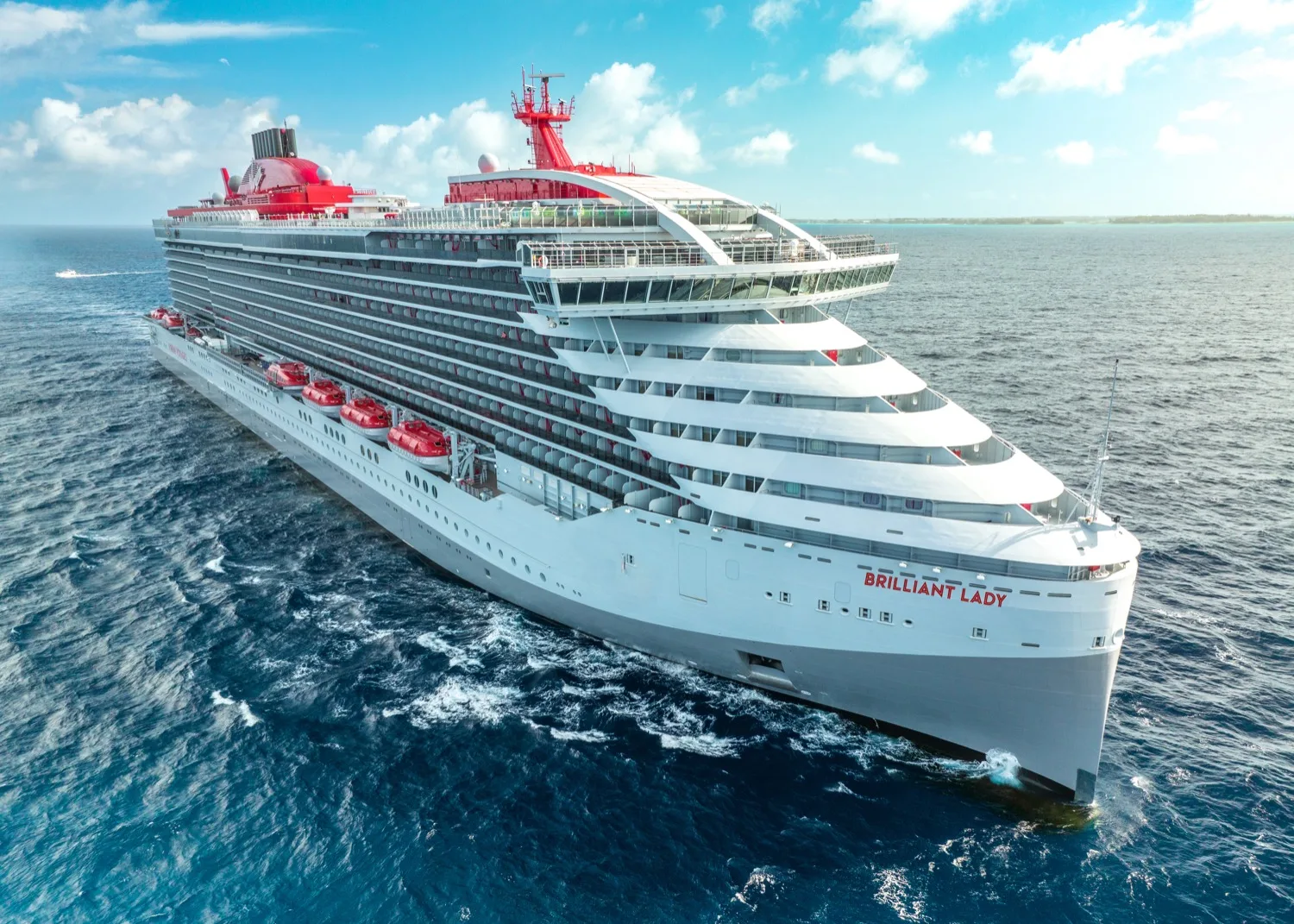
Clients ask me this one a lot, because Virgin keeps adding ships and opening up new homeports. Right now I am working with four ships in service, Scarlet Lady, Valiant Lady, Resilient Lady, and Brilliant Lady, and the itinerary range keeps widening, which is part of why this choice actually matters now in a way it did not a few years ago.
Brilliant Lady is the one I am getting the most questions about in 2026. She had her inaugural tour in 2025, and I walked her early, which I wrote up in our Brilliant Lady preview. She is now running new North American patterns for me, including Alaska voyages out of Seattle in summer 2026. Her West Coast rollout is split between Los Angeles and Seattle departures this year, which opens the brand up to a whole different kind of client than the Caribbean lineup does.
I find this interesting because a lot of my clients had honestly written Virgin off as a Caribbean and Mediterranean line. Alaska changes that conversation. When someone asks me whether an adults-only Alaska cruise is a real option now, my answer is yes, and it tends to appeal to a very specific traveler on my roster, usually couples or groups of close friends who want scenery and destination focus without the family energy that dominates most Alaska sailings.
That said, when a client is new to Virgin and asks me where to start, I still usually point them toward Caribbean or Mediterranean first. Those sailings are where the product shows off best on a first trip, the ship atmosphere, the dining, the nightlife, the full adults-only feel. Alaska can absolutely work, but it is a destination where itinerary design, scenic cruising, weather, port time, and cabin choice carry more weight than they do in the Caribbean, and I want to compare it carefully against the rest of the market before I make it someone’s first Virgin sailing.
The short version I give clients, not every Virgin ship is right for every itinerary, and not every itinerary is right for every client. Matching the two is where I earn my keep.
Who should book Virgin, and who probably should not?
This is the part I think more advisors should say out loud.
You should look seriously at Virgin if you are a couple, honeymooner, solo adult traveler, or group of friends who wants a social ship without a spring-break-for-everyone energy. You should also look at it if dining matters to you, you appreciate a more modern design style, and you like the idea of an adults-only environment that feels intentional instead of tucked into a corner of a family ship.
Virgin can also work well for travelers who normally say they are “not cruise people.” Sometimes what they really mean is they do not like the old-school cruise format they have in mind. Virgin’s restaurant structure, entertainment style, and overall vibe can sometimes win over people who are bored by the traditional sales pitch.
You probably should not book Virgin if you need a big casino-centered experience, want every day to be packed with classic cruise activities, are cruising primarily for a children’s program, or want an ultra-traditional luxury environment. It also may not be the best fit for travelers who want the predictability of a standard dining room rotation and very clear cruise traditions.
I would add one more category, travelers who hate ambiguity. Virgin has a lot of personality, and with that comes some quirks in how things are explained, especially around promotions and loyalty. If you are the type who wants every rule to feel simple and every perk to be easy to decode, that is where having a strong advisor matters. The product is good. The fine print can still require attention.
My bottom line on Virgin Voyages right now
A lot of clients have been asking me whether Virgin Voyages is just a trend or whether it is actually becoming one of the smartest cruise options for adults. My answer is that it is absolutely a serious option, but it is not a universal answer.
What Virgin has done well is create a product with a distinct point of view. Adults only. A more flexible dining model. No traditional drink package. Stronger emphasis on atmosphere and included experiences. That combination speaks very directly to certain travelers, and in 2026 it is speaking to a lot of them.
What you need to watch are the details. Gratuities are no longer a simple “all included” conversation for current bookings. Status match and Blue Extras have timelines and limitations that need to be read carefully. MNVV can be valuable, but only when applied intelligently to the right booking. Shore Things can be worth it, but not every port requires you to book the cruise line version. And your airport and transfer plan can make or break the last day faster than most people expect.
That is why I do not think Virgin is a product you should book on vibes alone, even though the vibes are a big part of the appeal. It works best when someone who understands the line helps match the ship, sailing, cabin, promotions, and logistics to how you actually travel.
If you have been wondering whether Virgin Voyages makes sense for your next trip, that is the conversation to have first. Not “is it good?” but “is it good for us?” Once you answer that clearly, the rest tends to fall into place.
If you want help sorting through Virgin sailings, current promotions, MNVV strategy, or whether this line fits your travel style better than the alternatives, that is exactly the kind of planning conversation we handle at Travel by Trinidad. Reach out here and we will look at the real options, the real terms, and the real logistics before you commit.