Driving the Costa del Sol: Tolls, Tight Garages, and the Road to Ronda
Quick Verdict: Renting a Car Here
Rent the car, book it smaller than you think you need, and decide the toll question before you get to the counter. A car is what makes a Costa del Sol home base work. It is also the part of the trip most likely to cost you money you did not plan on, and I have the scraped rental to prove it.
The short version:
- The AP-7 is the fast toll road, the A-7 is the free coastal road. Both go where you are going.
- Rental company toll transponders are convenient and priced per day, not per trip. Do the math.
- Garages are tight. Tighter than you are picturing. Size your car accordingly.
- The drive to Ronda is a mountain road, not a highway. Be honest about whether that is for you.
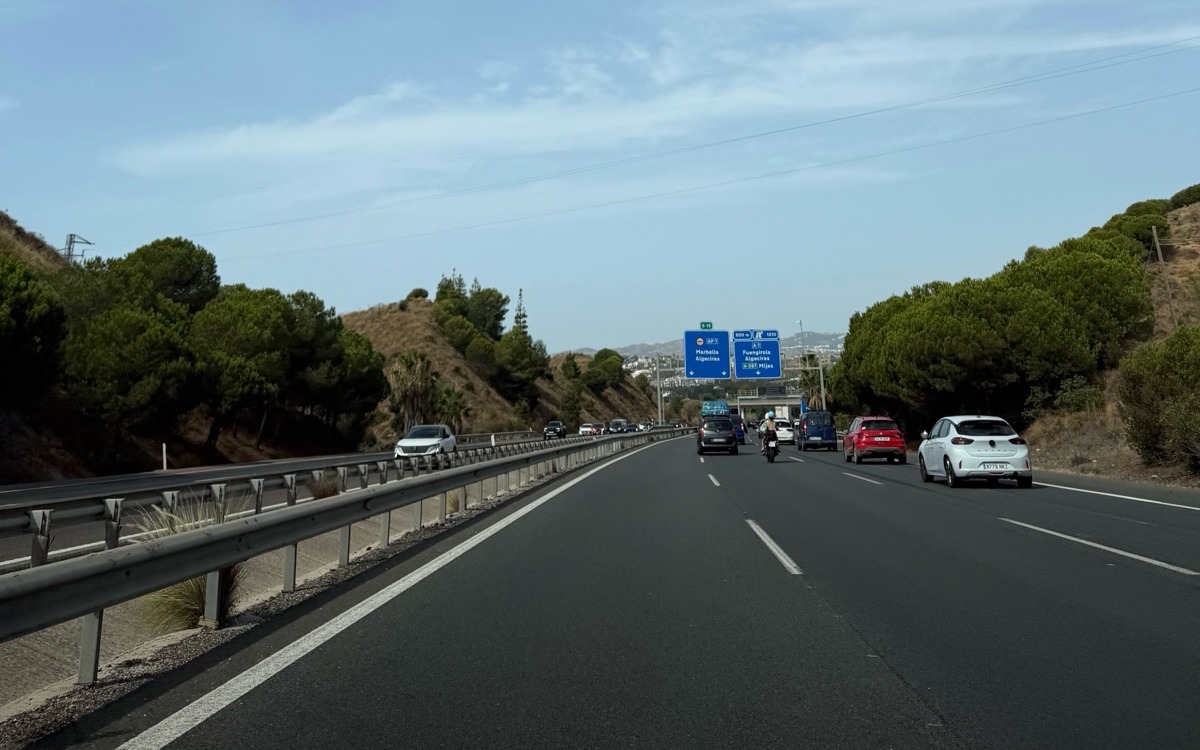
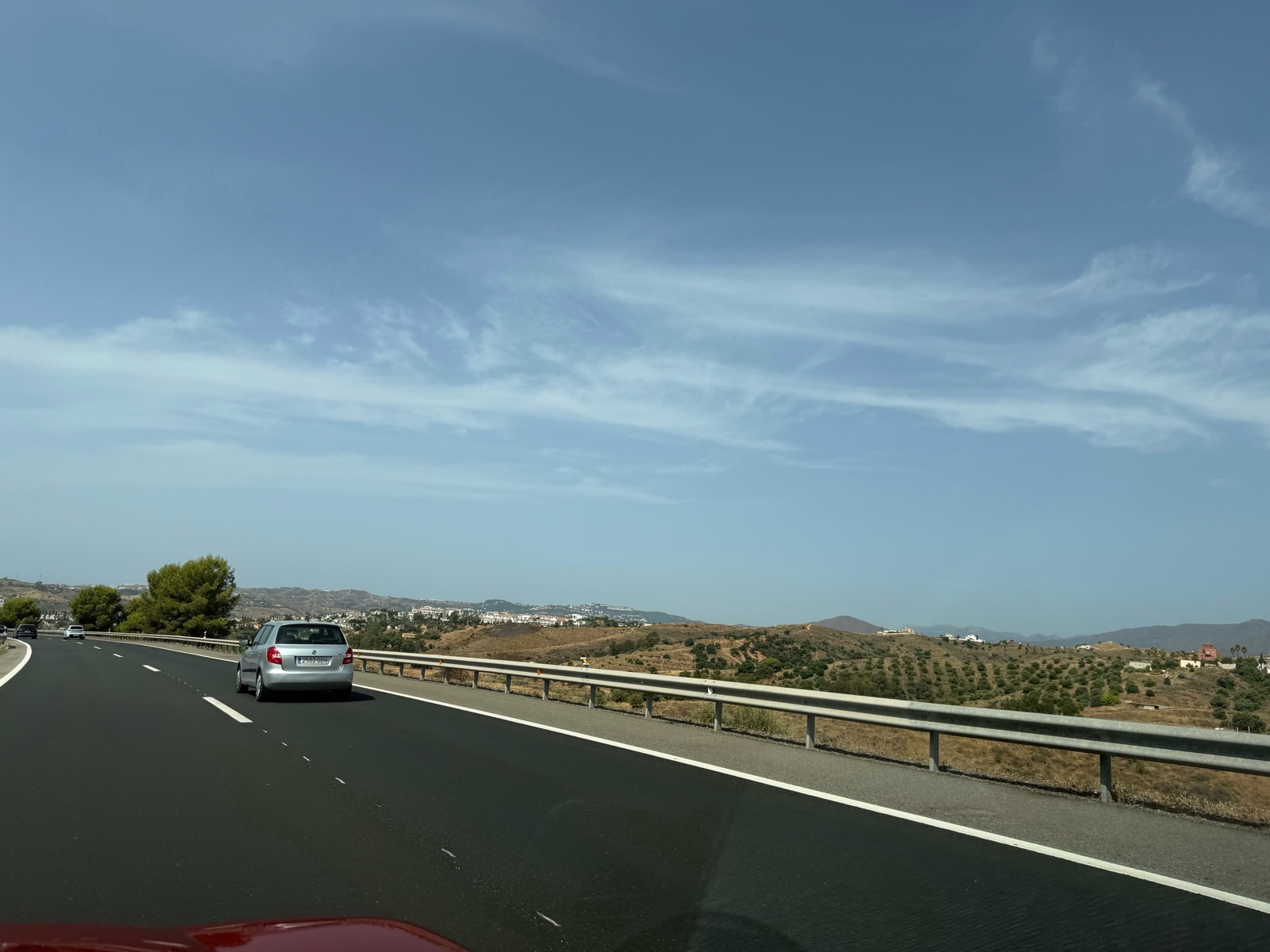
We flew into Malaga, picked up the car at the airport, and drove straight down to our base outside Estepona. You leave the airport on the A-7 and pick up the AP-7 toll motorway further west, and the whole run took us about 45 minutes to an hour depending on traffic. It is genuinely easy driving: wide, well signed, and straight down the coast. If your first thought getting off a transatlantic flight is “I do not want to drive right now,” this particular drive is about as gentle as it gets.
Everything I got wrong came later.
The toll question, decided at the rental counter
The rental company offered their own version of an EZPass transponder at about 10 euros per day. Paying as you go, the tolls we were hitting ran about 9 euros a time.
The thing that makes this less obvious than it looks is that the AP-7 here is split into sections, so one journey is not automatically one toll. A run along the coast can pass through more than one tolled section, and the total for a longer trip is higher than a single barrier charge suggests. In peak summer, the published Malaga to Estepona through fare runs to roughly 15 euros each way.
So the honest version of the math:
- Out most days, doing airport runs and long coastal drives? The transponder is likely worth it, and you stop thinking about it entirely.
- Staying put and only making a couple of toll trips? Pay as you go.
Ask one question at the counter before you decide: does the daily fee include the tolls, or is it just a device that bills them to you separately? That single answer changes the whole calculation, and it is not always volunteered.
We took the transponder and I would again, because we were out most days and I did not want to think about it.
Here is the thing worth understanding before you are staring at a sign at 120kph: the AP-7 is the toll motorway, and the A-7 is the free coastal autovia running roughly parallel. They are both proper divided highways. The difference is that the A-7 runs closer to the developed coast, with far more exits and merging traffic, so it backs up in a way the toll road does not, especially in July.
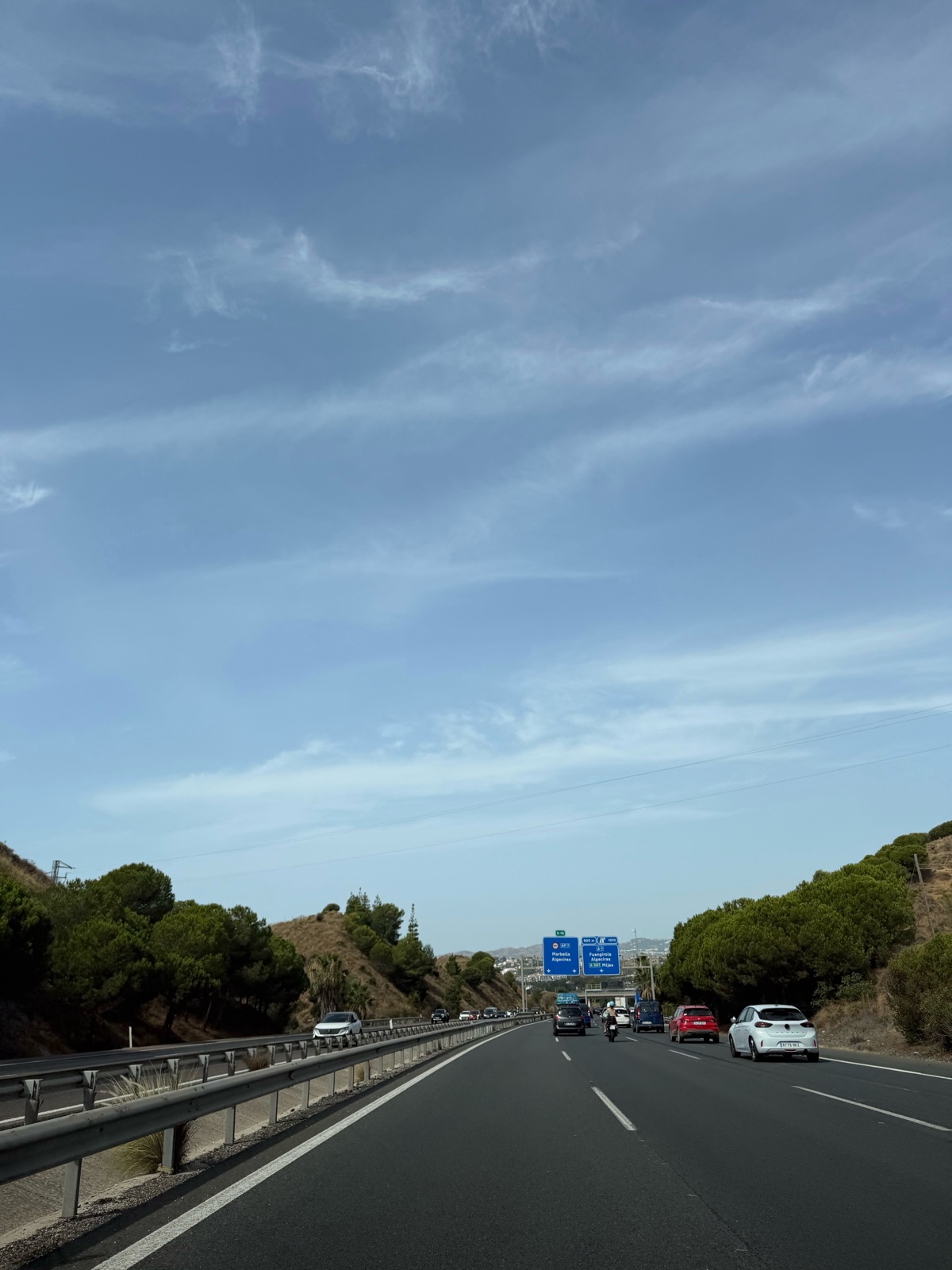
On a day where we had somewhere to be, we took the toll road. On a day where the drive was part of the point, the free coast road was nicer.
The garages will get you
Here is the lesson I would put first if I could only give you one: parking garages in Spain are small, and Americans consistently underestimate how small.
Narrow entry ramps. Tight corners. Columns exactly where you want your car to be. Spaces sized for a European hatchback, not for whatever the rental desk upgraded you into.
We learned this on day one, when we clipped the car:
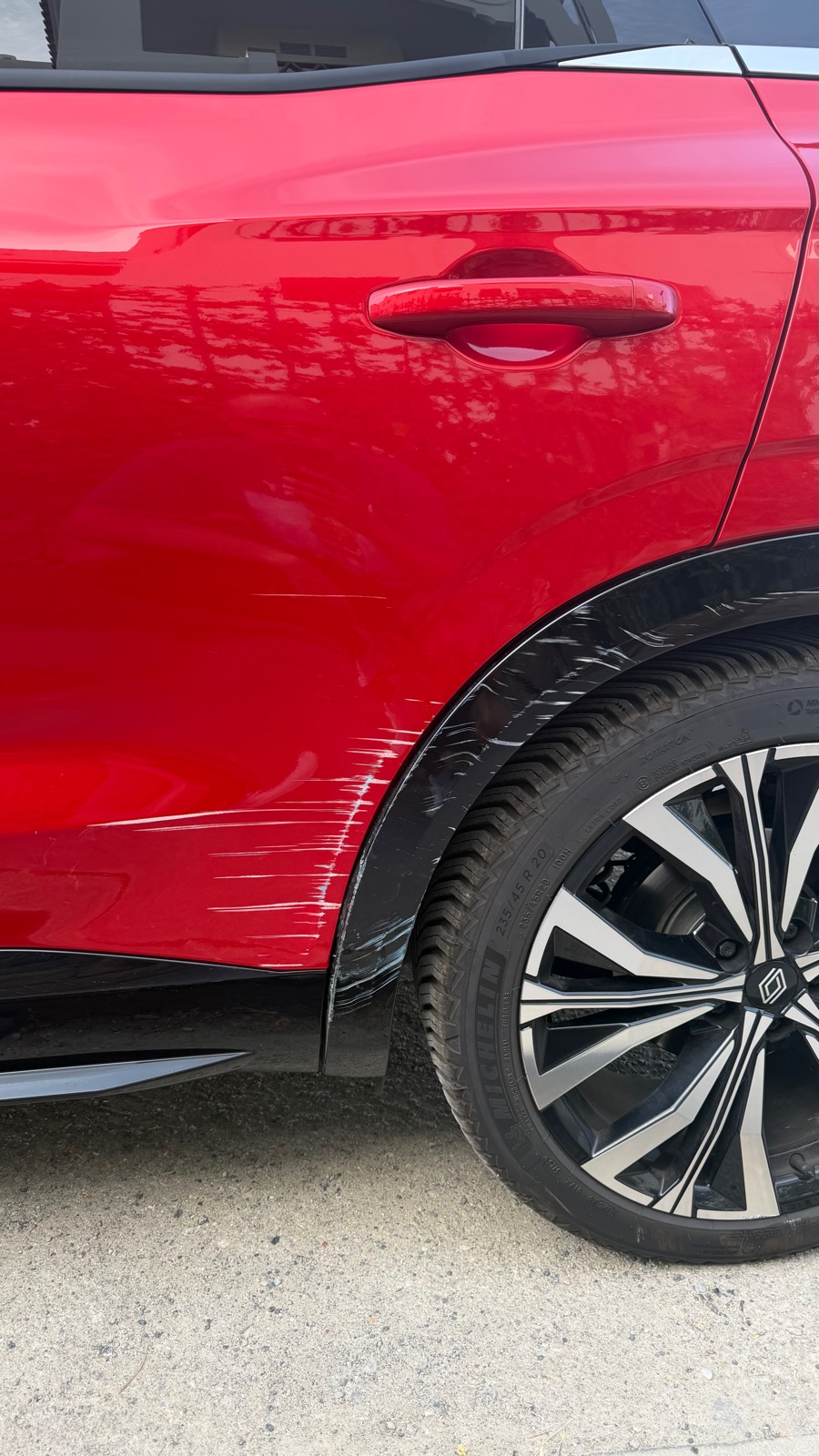
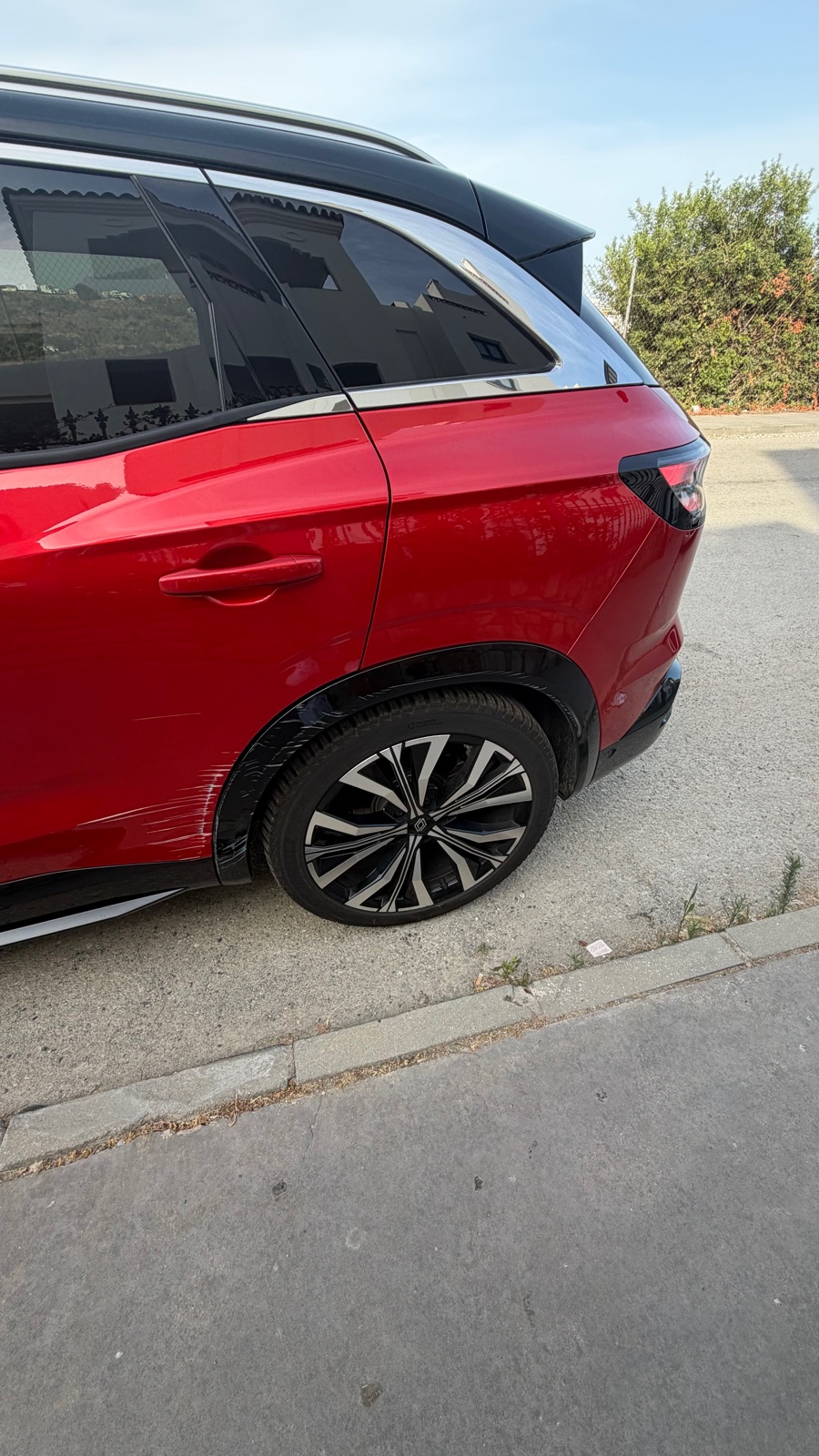
I am including these because every other article about driving here says “parking can be tight” and moves on, and that phrasing did not prepare me for anything. This is what tight actually means.
How it actually got paid for
Here is the part people usually leave out of the story. We paid the rental company at drop-off, and we are now working with our credit card to file the claim through its rental coverage.
That order of operations is worth understanding before you rent anywhere abroad. Credit card rental coverage may be primary or secondary depending on the card and the country, and either way it is reimbursement, not a get-out-of-paying card. You settle with the rental company first, then you file. Which means two things for your trip:
- The card you pay with matters, and you want to know what its rental benefit actually covers before you are standing at a counter in another country. Not all cards include it, and some exclude certain vehicle classes or countries.
- Document everything at both ends. Photos at pickup, photos at drop-off, and keep the damage invoice the rental company gives you. That paperwork is the claim.
I will update this post when the claim resolves, because “how long did it take and did they pay” is the part nobody ever writes down.
What I would do differently:
- Take the rental company’s own insurance. This is the big one. Most rental companies here offer full coverage where you hand the keys back and walk away, damage and all. I skipped it and relied on the credit card, and having now been through the drop-off conversation and the claim paperwork, I think on a two-week rental that walk-away coverage is worth the money. On a two-day rental I would still skip it. The longer you have the car, and the more old-town garages you park it in, the more the odds turn.
- Book a smaller car than feels right. The extra space is worth less than the clearance.
- Decline the upgrade if it means a bigger vehicle. Bigger is worse here.
- Take the walk-around video at pickup, and take it slowly and in good light. If you do put a mark on the car, you want to be certain about what was already there.
- In old towns, take the first garage you find rather than circling for a better one. Marbella’s old town has one of the smallest garages we have ever parked in, and there was no better option further in.
One genuine upside: parking is cheap by our standards. A few hours in Estepona ran us under $10 total. Coming from New Jersey parking rates, we never once thought twice about paying for a garage. Just get a car that fits in one.
The drive to Ronda is a different kind of driving
The coastal roads lull you. Ronda does not.
The road up is mostly two lanes through the mountains, with more curves than I could count. It is a beautiful drive and the payoff at the top is real. It is also nothing like the AP-7, and I was not braced for the difference.
My honest advice, and I say this as someone perfectly comfortable driving: if you are not confident driving in a foreign country, do not make Ronda the day you find out. Book a tour that includes transport. You will enjoy the town more if you are not white-knuckled for the two hours before it, and you can look out the window on the way up instead of at the guardrail.
If you are driving it yourself, go early before it gets hot and busy, and let the person behind you pass rather than rushing through the curves.
The practical stuff nobody mentions
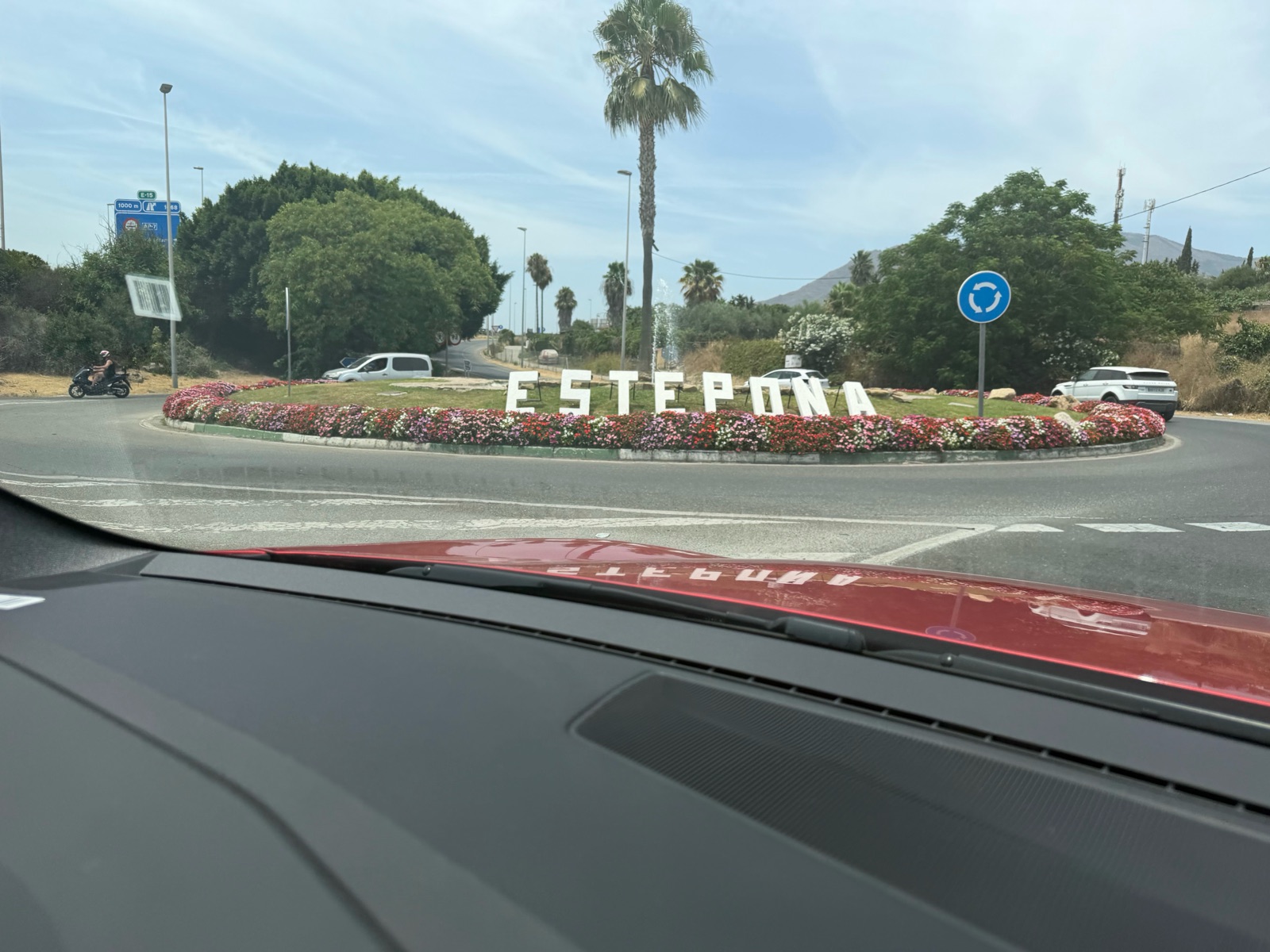
The roundabouts. So many roundabouts. They are not an occasional feature here, they are the default way roads meet and the standard way you enter a town. On a normal day out you will go through more of them than you can count, and a single short drive can be four or five in a row.
If you are not used to them, that is genuinely the thing to practice mentally before you land. They move faster than you expect, and hesitating in one is worse than committing to it. Once they stop registering as events, driving here gets easy.
Fuel up before the mountain days. Stations are common along the coast and sparse once you climb.
Distances are short but slower than they look. Estepona to Marbella is about 25 minutes. Gibraltar is about 45 minutes. Malaga airport is roughly 45 minutes to an hour on the toll road, and Malaga city center is longer again. Nerja and Setenil are the long ones, closer to an hour and a half or more. Everything takes a little longer than the map says, especially in July.
Gibraltar no longer has the border checkpoint it was famous for. The checkpoints came down and the fence was removed in July 2026 under an EU and UK treaty, which removes the queue that used to make a Gibraltar day trip a gamble. If you read an older guide that budgets an hour for the crossing, that advice is out of date. Carry your passport anyway. More on that day in the Gibraltar post.
Booking the car: what I would decide before I got there
Most of the money and most of the stress in a rental is decided before you reach the counter. Here is what I would settle in advance.
Size, and I mean genuinely small. I have said this twice already because it is the single decision that would have saved us. Whatever class feels right for your luggage, look at the one below it. The extra clearance is worth more than the extra trunk space, and you can put a bag on a lap for the twenty minutes it matters.
Transmission. Manual is still common and often cheaper in Europe. If you cannot drive one, filter for automatic explicitly at booking, because discovering this at the counter means taking whatever is left at whatever it costs.
Insurance, decided in advance rather than at the desk. The counter is the worst place to make this call, because you are tired, there is a line behind you, and the person explaining it is the person selling it. Work out beforehand what your credit card actually covers, then decide whether you want the rental company’s walk-away coverage on top. For a two-week rental, I would.
The toll transponder question, with the clarifying question above ready to ask.
Fuel policy. Full-to-full is almost always the honest one. Prepaid fuel is a convenience you pay a premium for.
Additional drivers. If two of you will drive, add the second driver properly. It usually costs something and it is not worth the exposure of skipping it.
Airport pickup versus in-town. Airport is convenient and usually carries a surcharge. On a two-week rental it is generally still the right call, because the alternative is getting yourself and your luggage into town first.
The stuff that surprised us
Small things nobody puts in a guide:
Spanish drivers are better than their reputation. Traffic moves briskly and lane discipline is decent. The chaos we were braced for did not materialize.
Speed cameras are real and common. Fines follow the rental company home and get passed to you with an administration fee attached. Watch the posted limits, which change more often than you expect.
Blue lines mean paid street parking, and white generally means free. Learn this on day one rather than day six.
Gas stations can be sparse inland. Fill up on the coast before you head for the mountains.
Your phone is your navigator, so sort out data before you land. Download offline maps as a backup, because mountain coverage is patchy exactly where the driving is hardest.
Was it worth it
Completely, scrape included. The car is what turned two weeks in one apartment into two weeks with the whole region available to us. Without it we would have seen Estepona and booked tours for everything else, which is a different and more expensive trip.
Just go in understanding that the driving here has three modes: easy coastal motorway, tight historic-town parking, and genuine mountain road. Most people plan for the first one only.
Next in this series: the white towns worth driving to, from Malaga’s cathedral to Ronda’s gorge.
Planning a Spain trip with a rental car and a home base? We have now done this one ourselves, garage column and all. Email me at miguel@travelbytrinidad.com or start with our two weeks in Andalucia.